Trusted by teams at






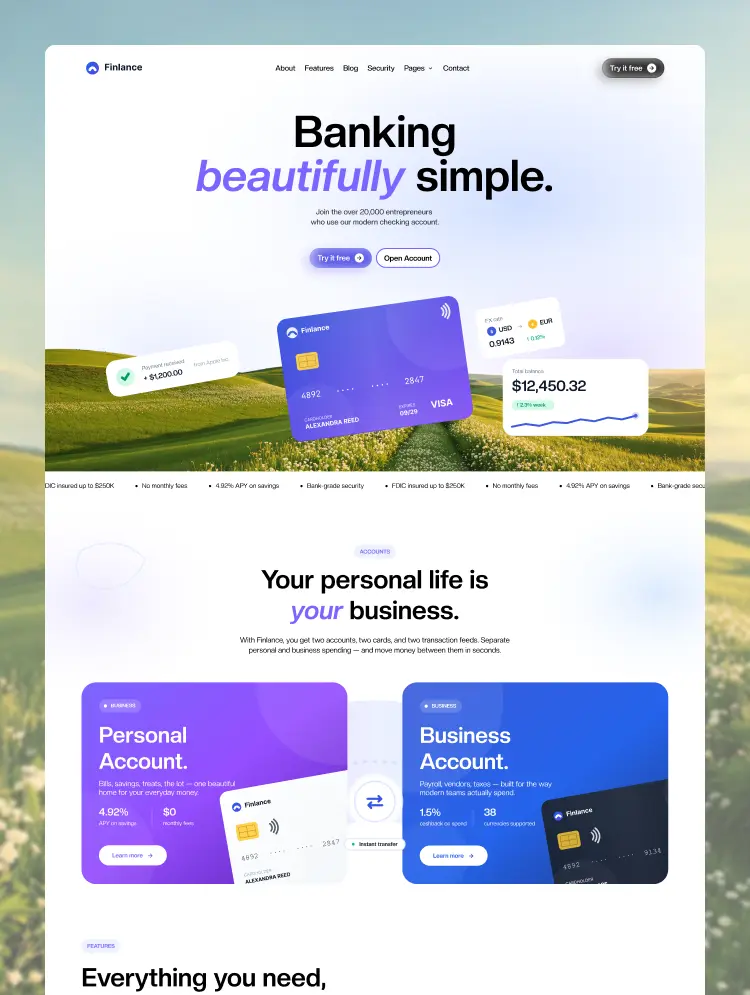
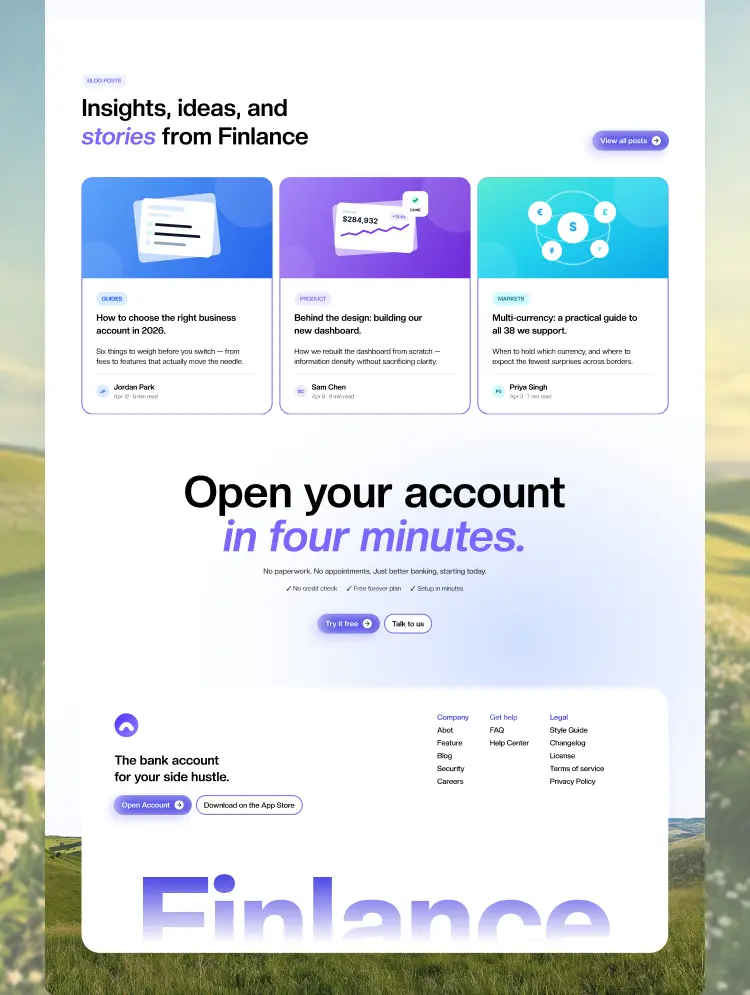
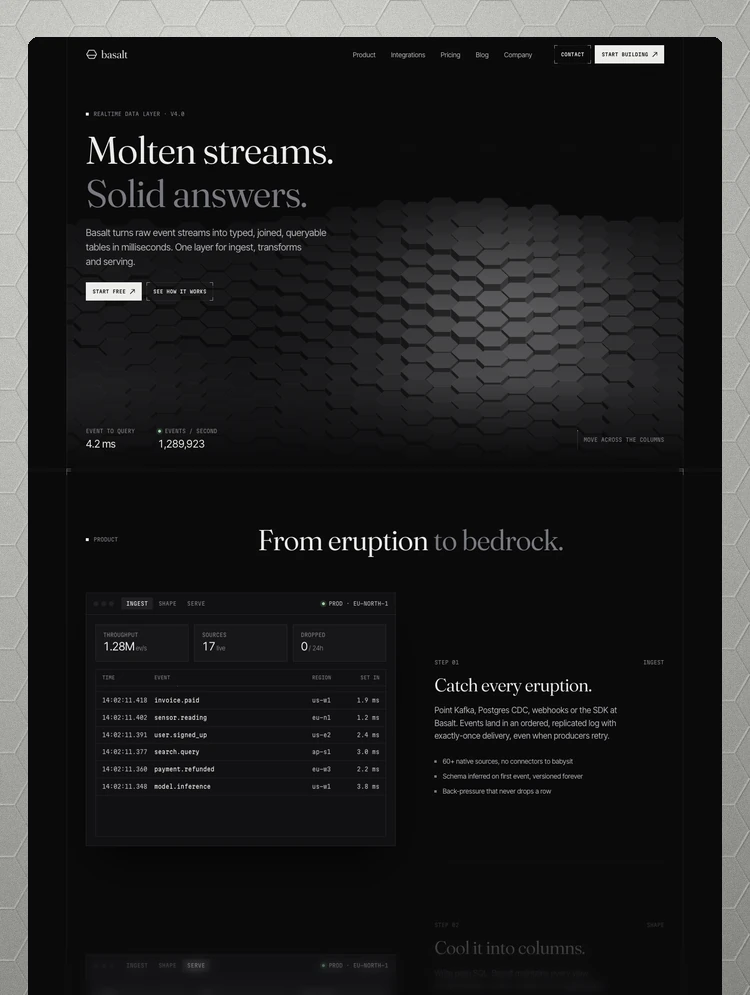
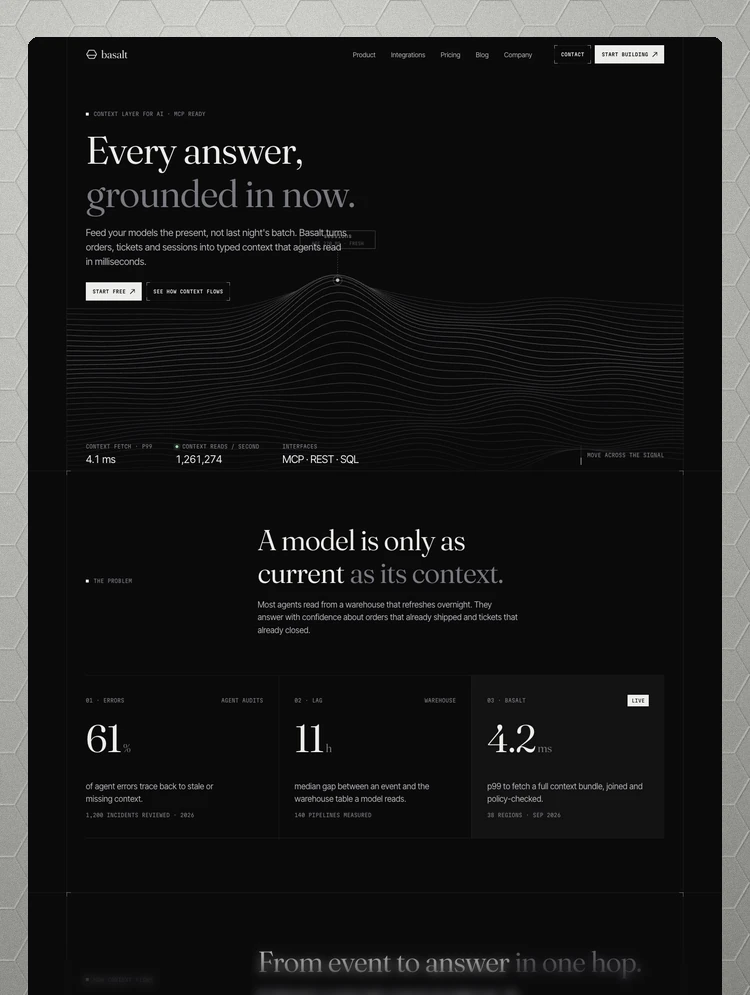
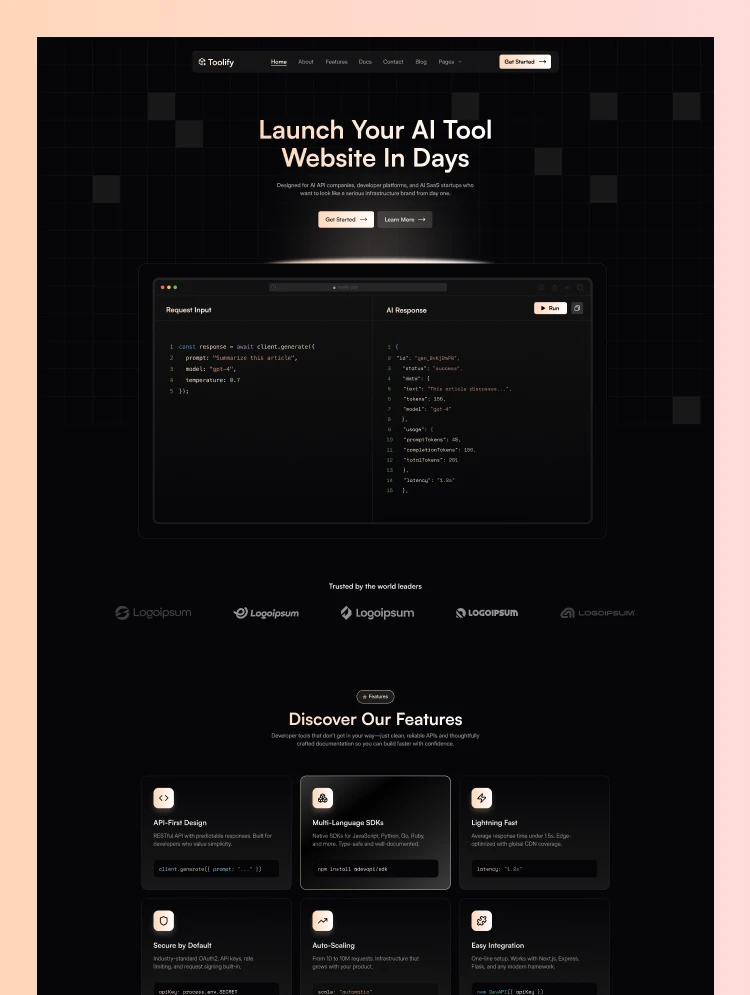
Toolify is a product site template for technology, AI, tech, documentation, startup, SaaS, app, software, and AI agency businesses. It pairs features and pricing with full documentation and a changelog, giving a technology product, AI product, tech product, startup, SaaS product, app, software product, or AI agency a clear place to present technology features, technology solutions, technology capabilities, AI features, AI solutions, AI services, tech features, tech solutions, app features, app solutions, software features, software solutions, startup solutions, SaaS solutions, product documentation, AI documentation, technology documentation, tech documentation, app documentation, software information, AI information, and AI agency services. Toolify also provides a professional structure for showcasing product features, explaining solutions, sharing product information, and keeping technology, AI, SaaS, app, and software updates organized through documentation and changelog content.
Developer tools are evaluated by people who read the docs before they read the pitch. Toolify is built for that audience, carrying documentation and a changelog as proper pages alongside features and pricing rather than hiding them behind a sign-up. It gives a technology product, AI product, tech platform, startup, SaaS tool, app, software, or AI agency a clear place to present technology features, technology solutions, technology capabilities, AI features, AI solutions, AI capabilities, tech features, tech solutions, tech capabilities, app features, app solutions, app capabilities, software features, software solutions, SaaS features, startup solutions, and product documentation.
It suits a technology product, AI product, tech platform, documentation-focused startup, SaaS tool, app, software, or AI agency looking for a professional website that clearly presents technology, technology features, technology solutions, AI features, AI capabilities, tech capabilities, tech solutions, app features, app capabilities, app solutions, software solutions, SaaS solutions, technology documentation, AI documentation, tech documentation, app documentation, software documentation, changelog updates, and AI agency services.
Static pages
CMS collection templates
Section folders
Utility pages
Blog entries are held in Webflow CMS collection. Adding an entry means filling in fields rather than rebuilding a page, and it appears in the relevant listings automatically. For a site that gets updated regularly, this is the part that decides whether it stays current.
Most product templates give you features and pricing and assume docs live elsewhere. A technical buyer checks whether documentation exists and whether the product is still being shipped, and both answers are on the site here.
The home page structure leads with what the tool does and who is using it, which is the order a developer evaluates in.
It is the marketing site. It does not include the product, an API, authentication, a usage dashboard or billing. The documentation page is a designed shell for your own content, not a docs platform with search, versioning or code sandboxes. Pricing is presented rather than transacted.
Toolify gives a technology business a professional space to showcase technology features, technology solutions, technology capabilities, technology services, and technology products. Present technology information, product features, technology updates, and technology expertise through a clear technology website.
Toolify helps an AI business showcase AI features, AI solutions, AI capabilities, AI services, and AI products. Present AI information, AI tools, AI technology, AI updates, and AI expertise through a professional AI website.
Toolify gives a tech business a focused space to showcase tech features, tech solutions, tech capabilities, tech services, and tech products. Present tech information, tech tools, tech updates, and technical expertise through a professional tech website.
Toolify helps a documentation-focused business showcase documentation, product documentation, technical documentation, AI documentation, and software documentation. Present documentation, guides, product information, technical resources, and documentation updates through a professional documentation website.
Toolify gives a startup a professional space to showcase startup products, startup features, startup solutions, startup capabilities, and startup services. Present startup information, product updates, technology, and startup expertise through a focused startup website.
Toolify helps an app business showcase app features, app solutions, app capabilities, app services, and app products. Present app information, product updates, app functionality, and app expertise through a professional app website.
Toolify gives a SaaS business a clear space to showcase SaaS features, SaaS solutions, SaaS capabilities, SaaS services, and SaaS products. Present SaaS information, product updates, software tools, and SaaS expertise through a professional SaaS website.
Toolify helps a software business showcase software features, software solutions, software capabilities, software services, and software products. Present software information, product updates, software tools, and software expertise through a professional software website.
Toolify gives an AI agency a professional space to showcase AI agency services, AI agency solutions, AI agency capabilities, AI agency projects, and AI agency expertise. Present AI agency information, AI services, technology solutions, AI projects, and agency expertise through a focused AI agency website.
Blog posts are CMS entries. Documentation, changelog, features and pricing are static pages edited in the Designer. Style guide, licence and changelog pages are included.
If you would rather not do it yourself, our team can customise this template for you, from colour and content changes through to new pages and custom functionality. Request a Webflow template customization quote, or read more about our Webflow customization service.
Is the documentation page a real docs system?
No. It is a designed page for your content. Search, versioning and code sandboxes come from a dedicated docs platform if you need them.
Does it include the product or API?
No. This is the marketing site only.
Can I take payments on the pricing page?
Not in this build. Pricing routes to sign-up or contact, and billing lives in your own system.
Is there a blog?
Yes, held in a CMS collection.
Why is there a changelog page?
Technical buyers check whether a tool is still actively shipped. A visible changelog answers that faster than anything else on a site.
Support and ongoing updates are included. Message us after purchase if you need the Figma file and we will send it over.
Can only be used by you or one client for one end product. You cannot resell or redistribute this template in its original or modified state.
This template is free to use in both person and commercial projects. You cannot resell, redistribute, or license this template in its original or modified state.
Questions about this template? Just reach out to the template designer and they will get back to you within 2 business days.
For advanced design guidance, please share your questions in the Webflow Forum or reach out to a Webflow Partner.
Share your feedback by leaving a comment below.
For template support, please check the Support tab.

Use the Preview in Designer option to make any edits to the template pages and preview how the layout would fit your content. Changes in preview mode won't be saved.
It isn't possible to apply a template to an already existing project. Instead, you'll need to create a new project based on the Template.
With a Core plan (or higher), you can export sites you build in Webflow, including templates, to host them anywhere you'd like.
Webflow templates are only available for purchase through Workspaces and legacy individual accounts.
CMS templates are designed to use the power of the Webflow CMS. It is possible to downgrade to a Basic Site Plan as long as all CMS content is deleted from the project.
Use the View Connections tool to understand where the CMS content is on the site and delete any dynamic listings and CMS content. We also recommend you to check Components and the Collection page Templates.
Ecommerce templates are designed to use the power of Webflow Ecommerce. It is not possible to remove Ecommerce from a template, however, deleting all Ecommerce Products and Categories from the project, will allow to select a lower Site Plan.
Membership templates are designed to use the power of Webflow Membership. It is not possible to remove Memberships from a template.
.svg)


Display 3D graphics elegantly on every device.
Bring life and motion to your design with background videos
Reposition and resize items anywhere within the grid to produce powerful, responsive layouts — faster and without code.
Reusable elements you can use across your site. Edit a component and all copies update instantly.
Customize the built-in database for your project or just add new content.
Custom design for the 404 page of your website
Build your lead lists and subscriber base with beautiful forms.
Comes with GSAP animations and interactions for additional polish and usability.
Comes with animations and interactions for additional polish and usability.
Displays perfectly on desktops, tablets, and phones.
Site navigation automatically collapses into a mobile-friendly menu on smaller devices.
Display images and text elegantly on every device with our touch-friendly slider.
All graphics are optimized for devices with high DPI screens.
Uses fonts from Google's Web Font collection.