Trusted by teams at






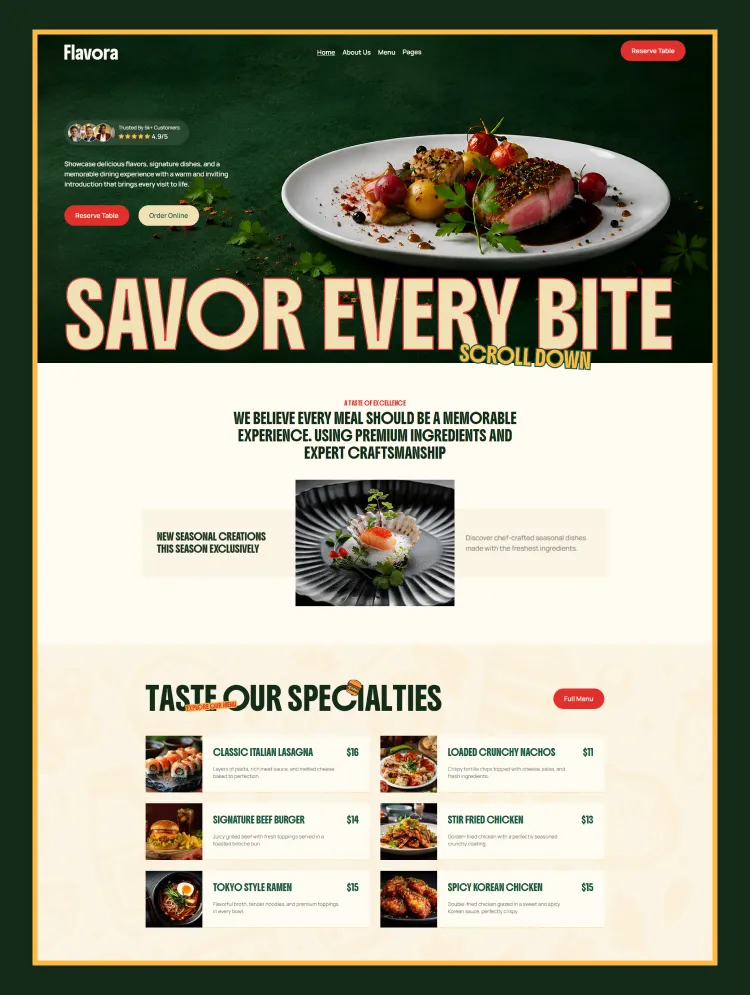
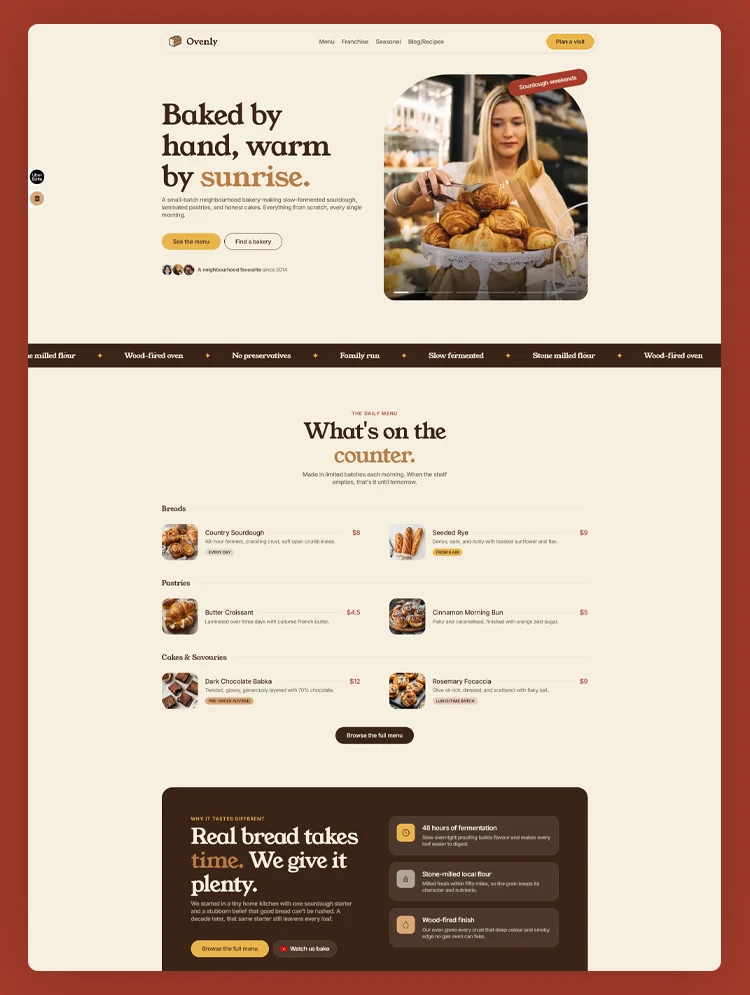
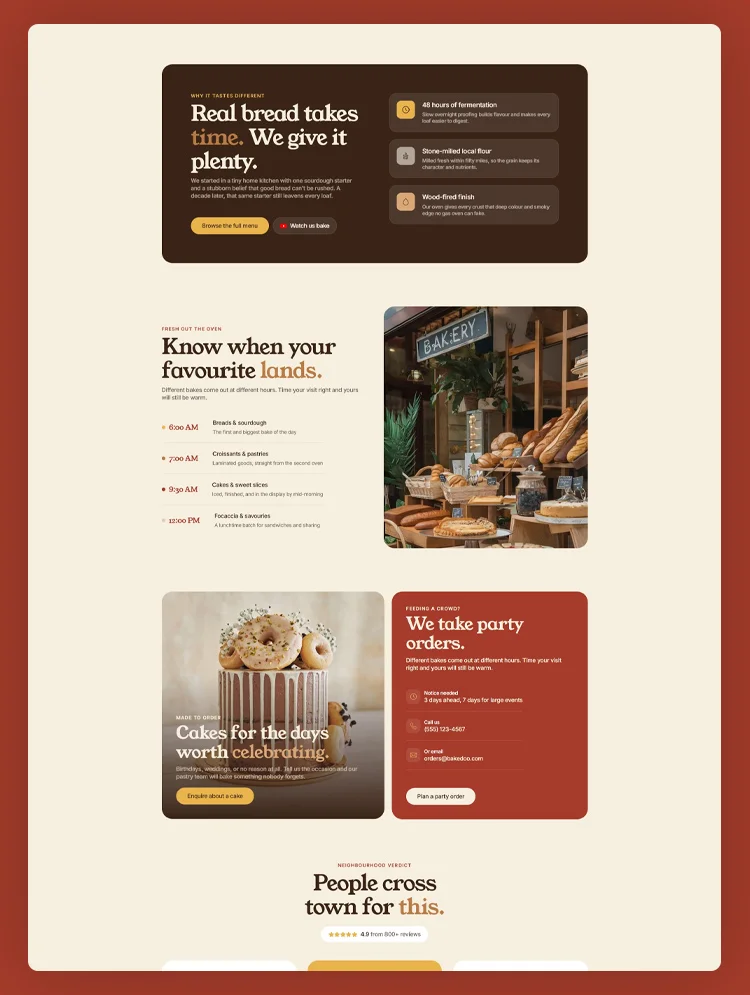
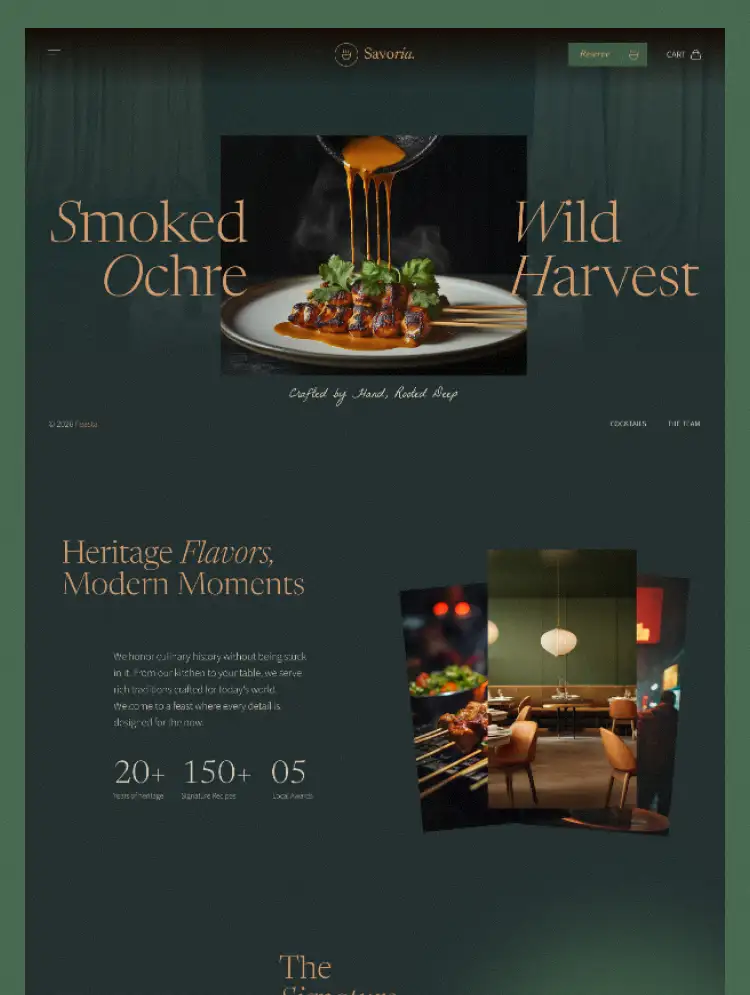
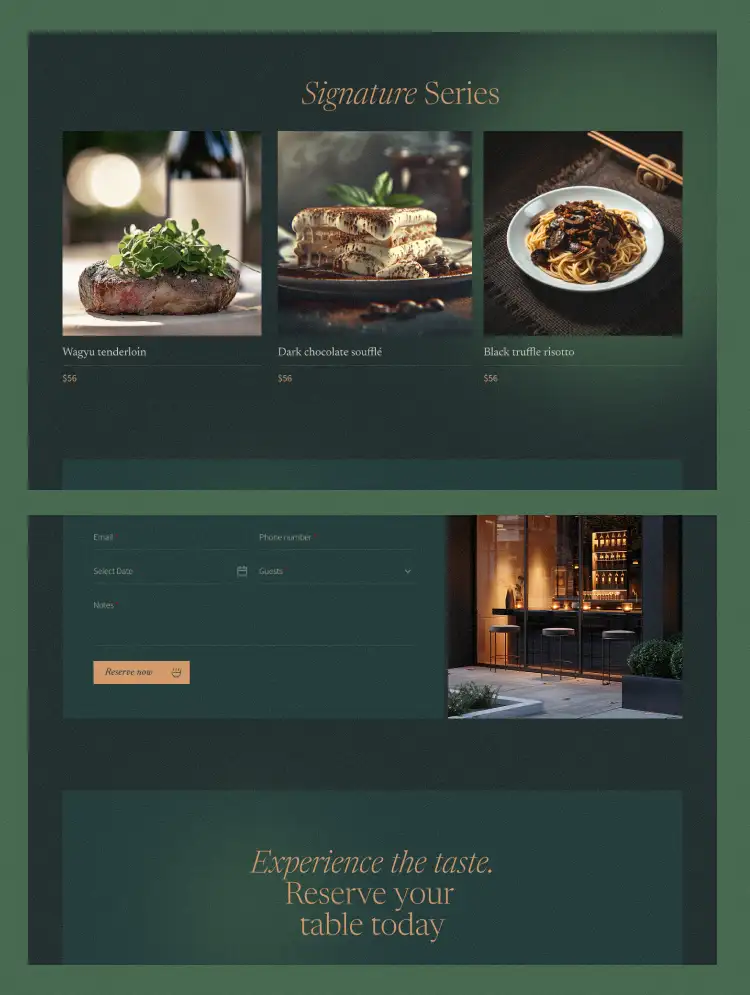
Restaurant TNC is a restaurant website template built for a restaurant, small restaurant, food shop, cafe and coffee shop, and food and drink business, with two restaurant menu layouts, a restaurant reservation form capturing date, time, and party size, a chef page, and a working food shop with checkout. Six CMS collections, including food shop products and a restaurant gallery, provide a complete restaurant, cafe and coffee shop, and food and drink website structure for showcasing dishes, taking reservations, and selling food online. It also works well for a bistro, cafe, bar, or food and drink business offering food, reservations, curated menus, and online products.
A restaurant site is judged on the menu and the ability to book a table. Restaurant TNC is a restaurant website template covering both properly, with two restaurant menu layouts and a restaurant reservation form that asks for date, time, and party size rather than leaving it to a message field. The food shop functionality also gives the restaurant a way to sell food and retail products online through a working food shop. It also works well for a bistro, cafe, cafe and coffee shop, or bar that wants to combine dining, reservations, food and drink, and online food sales.
It suits any restaurant, bistro, dining room, cafe, cafe and coffee shop, food shop, fast food restaurant, food chain, or fast food stall taking reservations or selling food online. It is particularly useful for a restaurant, bistro, cafe and bar, or food and drink business with a food shop, retail products, or gift items alongside table trade. Any kind of restaurant or food shop can put together a professional website quickly using the Restaurant TNC Webflow website template, with restaurant menus, restaurant reservations, food shop products, food and drink offerings, and online food sales in one place.
Static pages
CMS collection templates
Section folders
Utility pages
Blog category, category, gallery, post, product and tag entries are held in Webflow CMS collections. Adding an entry means filling in fields rather than rebuilding a page, and it appears in the relevant listings automatically. For a site that gets updated regularly, this is the part that decides whether it stays current.
Menus are the most-visited page on a restaurant site and they suit very different presentations depending on whether the list is short and seasonal or long and sectioned. Keep the one that fits.
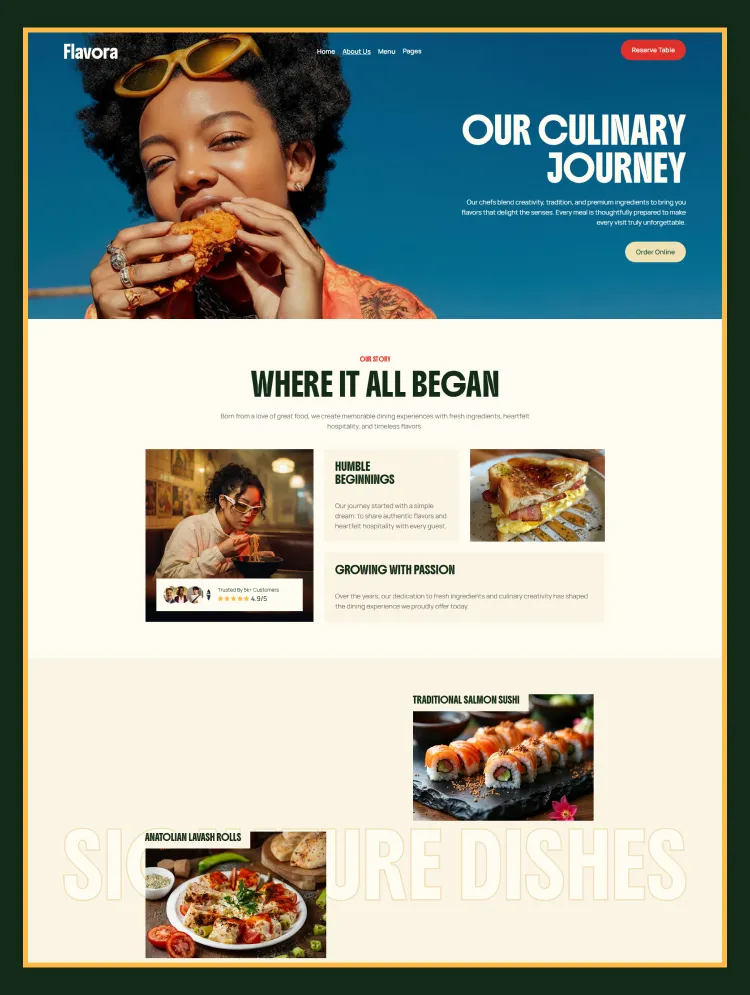
In a dining room where the kitchen is the draw, the chef is the brand. There is a page for it rather than a paragraph on about.
A separate home landing page treatment, useful for campaigns or a seasonal push.
It presents the menus and takes reservation requests. It does not check live table availability or manage covers and sittings, take deposits, send orders to the kitchen, or connect to an EPOS or reservation platform. Allergen information is a legal requirement for food businesses in many territories and is yours to publish accurately and keep current.
Restaurant TNC gives a restaurant a professional space to showcase restaurant menus, restaurant dishes, restaurant services, restaurant events, and restaurant experiences. Present dining options, reservations, food products, menu items, and online ordering through a focused restaurant website.
Restaurant TNC helps a cafe and coffee shop showcase cafe and coffee shop menus, cafe and coffee shop products, cafe and coffee shop services, cafe and coffee shop experiences, and cafe and coffee shop offers. Present coffee, food, beverages, reservations, retail products, and online ordering through a professional cafe and coffee shop website.
Restaurant TNC gives a food and drink business a focused space to showcase food and drink products, food and drink menus, food and drink services, food and drink offers, and food and drink experiences. Present meals, beverages, dishes, reservations, retail products, and online food sales through a professional website.
Restaurant TNC helps a bistro showcase bistro menus, bistro dishes, bistro services, bistro experiences, and bistro offers. Present curated menus, dining options, reservations, food products, and online sales through a professional bistro website.
Products, categories, posts, blog categories, tags and gallery are CMS entries. Both menu layouts are editable pages, so seasonal changes need no design work.
If you would rather not do it yourself, our team can customise this template for you, from colour and content changes through to new pages and custom functionality. Request a Webflow template customization quote, or read more about our Webflow customization service.
Does the reservation form check availability?
No. It captures date, time and party size, and you confirm against your own book.
Why two menu pages?
Two layouts. Short seasonal menus and long sectioned menus read very differently.
Is the shop a working store?
Yes, with products, categories and checkout.
Where does allergen information go?
On the menu items. Publishing it accurately is a legal duty in many territories.
Can it send orders to the kitchen?
No. Order routing needs an ordering platform or EPOS.
Support and ongoing updates are included. Message us after purchase if you need the Figma file and we will send it over.
Can only be used by you or one client for one end product. You cannot resell or redistribute this template in its original or modified state.
This template is free to use in both person and commercial projects. You cannot resell, redistribute, or license this template in its original or modified state.
Questions about this template? Just reach out to the template designer and they will get back to you within 2 business days.
For advanced design guidance, please share your questions in the Webflow Forum or reach out to a Webflow Partner.
Share your feedback by leaving a comment below.
For template support, please check the Support tab.

Use the Preview in Designer option to make any edits to the template pages and preview how the layout would fit your content. Changes in preview mode won't be saved.
It isn't possible to apply a template to an already existing project. Instead, you'll need to create a new project based on the Template.
With a Core plan (or higher), you can export sites you build in Webflow, including templates, to host them anywhere you'd like.
Webflow templates are only available for purchase through Workspaces and legacy individual accounts.
CMS templates are designed to use the power of the Webflow CMS. It is possible to downgrade to a Basic Site Plan as long as all CMS content is deleted from the project.
Use the View Connections tool to understand where the CMS content is on the site and delete any dynamic listings and CMS content. We also recommend you to check Components and the Collection page Templates.
Ecommerce templates are designed to use the power of Webflow Ecommerce. It is not possible to remove Ecommerce from a template, however, deleting all Ecommerce Products and Categories from the project, will allow to select a lower Site Plan.
Membership templates are designed to use the power of Webflow Membership. It is not possible to remove Memberships from a template.
.svg)


Uses fonts from Google's Web Font collection.
Display images and text elegantly on every device with our touch-friendly slider.
Site navigation automatically collapses into a mobile-friendly menu on smaller devices.
All graphics are optimized for devices with high DPI screens.
Custom design for the 404 page of your website
Reusable elements you can use across your site. Edit a component and all copies update instantly.
Showcase high-res photos and videos on a black backdrop.
Reposition and resize items anywhere within the grid to produce powerful, responsive layouts — faster and without code.
Shape your customer's experience and customize everything, from the home page to product page, cart to checkout.
Customize the built-in database for your project or just add new content.
Displays perfectly on desktops, tablets, and phones.
Build your lead lists and subscriber base with beautiful forms.
Comes with animations and interactions for additional polish and usability.